Keynote Speakers
Distinguished researchers sharing their insights and vision
Confirmed Speakers
Meet the distinguished researchers delivering keynote addresses at KSS 2026.
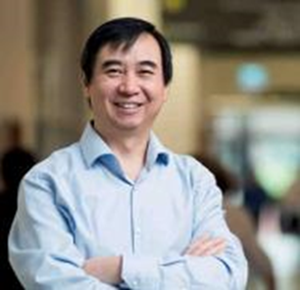
Prof. Mengjie Zhang
Centre for Data Science and Artificial Intelligence & School of Engineering and Computer Science, Victoria University of Wellington, New Zealand
“Evolutionary Machine Learning: 70 Years of Progress”
Abstract. Evolutionary machine learning has been very popular over the recent years. In this talk, I will firstly provide a brief overview of the history of evolutionary machine learning with the major developments over the past 70 years, then visit the main paradigms of evolutionary machine learning and their successes in classification, feature selection, regression, clustering, computer vision and image analysis, scheduling and combinatorial optimisation, deep learning, transfer learning and XAI/XML, and generative AI. The main applications, challenges and potential opportunities will be also discussed.
Biography. Mengjie Zhang is a Fellow of the Royal Society of New Zealand, a Fellow of Engineering New Zealand, a Fellow of the IEEE, an IEEE Distinguished Lecturer, and Professor of Computer Science (Artificial Intelligence) at Victoria University of Wellington, where he heads the interdisciplinary Evolutionary Computation and Machine Learning Research Group. He is also the Director of the Centre for Data Science and Artificial Intelligence at the University. His research is mainly focused on AI, machine learning and big data. He received the “Evo* Award for Outstanding Contribution to Evolutionary Computation in Europe 2023”, the “2024 Australasian Artificial Intelligence Distinguished Research Contribution Award”, and the ACM SIGEVO Outstanding Contribution Award in 2025. He is also a Clarivate Highly Cited Researcher in 2023–2025. Since 2007, he has been listed as a top five (currently No. 2) world genetic programming researcher by the GP bibliography. Prof Zhang is a member of the IEEE CIS Nomination Committee, and the immediate past Chair for the IEEE CIS Awards Committee. He is also a past Chair of the IEEE CIS Intelligent Systems Applications Technical Committee, the Emergent Technologies Technical Committee and the Evolutionary Computation Technical Committee, a past Chair for the IEEE CIS PubsCom Strategic Planning subcommittee, and the founding chair of the IEEE Computational Intelligence Chapter in New Zealand.
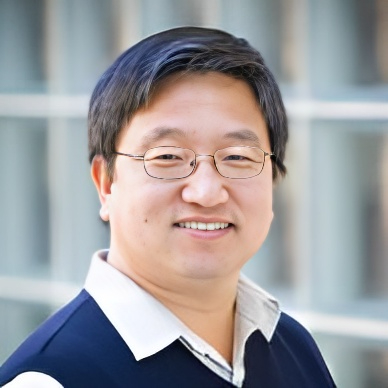
Prof. Byeong Ho Kang
School of Information and Communication Technology, University of Tasmania, Hobart, Australia
“Trustworthy Orchestration AI: From Ethical Principles to Governed Agentic Systems”
Abstract. Generative and agentic AI systems are changing how decisions are made, but they are being adopted faster than they can be properly governed. This creates serious risks involving opacity, accountability, autonomy, and ethical misalignment. This presentation argues that trustworthy AI cannot rely only on ethical guidelines or after-the-fact compliance checks. Trust has to be built into the system architecture from the beginning. The presentation introduces Trustworthy Orchestration AI as a framework for designing governed agentic AI systems. Rather than treating AI as a single autonomous controller, the framework views AI as a coordinated set of specialised modules operating under explicit policies, symbolic gatekeeping, human oversight, and auditable accountability mechanisms. I will outline thirteen architectural criteria, including the separation of governance and execution, symbolic mediation, human-in-the-loop oversight, auditability, lifecycle governance, resilience, and semantic communication integrity. Together, these criteria show how ethical and responsible AI principles can be translated into practical design rules for safer, more accountable, and more trustworthy AI systems.
Biography. Professor Byeong Ho Kang is an internationally recognised researcher in artificial intelligence, information systems, and knowledge engineering. He is known for pioneering hybrid, human-centred AI frameworks that integrate symbolic reasoning, machine learning, and governance mechanisms. His “orchestration paradigm” separates governance from execution, embedding ethics and accountability by design. This vision has been applied in projects spanning health platforms, smart factory systems, and broader industrial applications. His research extends well beyond academia through collaborations with the US Air Force, US Navy, Lockheed Martin Australia, CSIRO, Hyundai Steel, and SeeGen in South Korea. His applied AI systems cover intrusion detection, conversational robotics, smart data systems, industrial optimisation, and medical decision support. Over his career, he has published more than 300 papers with over 6,000 citations and led more than 25 large-scale projects across healthcare, defence, ICT, agriculture, and the smart factory industry. Professor Kang’s work on AI and human intelligence shows how emerging technologies act as both disruptor and enabler. In addition to his research, Professor Kang has held major leadership roles, including Head of the School of ICT at the University of Tasmania (2000–2024) and President of the Korean Academy of Scientists and Engineers in Australasia (2016–2017). He has also served as chair and committee member for leading international conferences such as the Pacific Rim International Conference on Artificial Intelligence and the Australian AI Conference.
Prof. Van-Nam Huynh
School of Knowledge Science, Japan Advanced Institute of Science and Technology (JAIST), Japan
“Talk Title To Be Announced”
Prof. Van-Nam Huynh is a Professor at the School of Knowledge Science, JAIST, with research interests spanning decision analysis and management science, data mining and machine learning, modelling and reasoning with uncertain knowledge, multi-agent systems, and kansei information processing. He has authored over 270 publications and is an active member of the international knowledge science community.
More speakers coming soon! We are in the process of confirming additional keynote speakers. Please check back for updates.