Call for Papers
Share your research at the 25th International Symposium on Knowledge and Systems Sciences
Conference Theme
The 25th International Symposium on Knowledge and Systems Sciences (KSS 2026) invites researchers, practitioners, and students to submit original contributions. This year's theme, “Knowledge Systems Sciences in the Era of Agentic AI,” examines how knowledge science and systems thinking must evolve as autonomous, goal-directed AI agents reshape the way knowledge is created, organised, and acted upon.
KSS 2026 seeks to bring together diverse perspectives from knowledge science, systems science, artificial intelligence, and related fields to foster interdisciplinary dialogue on the methods, models, and societal implications of intelligent systems that no longer merely assist — but plan, coordinate, and decide.
Topics of Interest
We welcome, but are not limited to, contributions in the following areas:
Knowledge Creation & Management
- Knowledge engineering and knowledge systems
- Knowledge graphs and semantic intelligence
- Meta-synthesis and advanced system modeling
- AI-driven decision support and intelligent governance
- Workflow automation and AI agents for enterprises
- Security, privacy, and AI safety
AI & Intelligent Systems
- Agentic AI and autonomous intelligent systems
- Foundation models and large language models (LLMs)
- Generative AI and multimodal AI systems
- Machine learning and computational intelligence
- AI for science (AI4Science / AI4S)
- Explainable, trustworthy, and responsible AI
- Human-AI collaboration and human-centered AI
- Text analytics and natural language processing
- Vision-language and multimodal interaction systems
Systems Science & Complexity
- Complex systems, complex networks, and complexity science
- Autonomous multi-agent systems and coordination
- Collective intelligence and swarm intelligence
- Agent-based social systems science
- Model-based systems engineering
- Digital twins and intelligent system simulation
- Intelligent cyber-physical systems
- Human-machine teaming and collaborative intelligence
Sustainability & Resilience
- System science for sustainability and resilience
- Intelligent manufacturing and Industry 5.0
- Intelligent transportation and smart cities
- Information fusion and intelligent sensing
Data Science & Analytics
- Computational social science
- Data mining, web mining, and knowledge discovery
- Online social networks and social computing
- Opinion dynamics, misinformation, and information diffusion
- Social simulation and behavioral modeling
- Social media analytics and societal intelligence
- Recommendation systems and personalized intelligence
Conference Proceedings
Published by Springer in the CCIS series
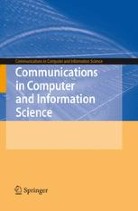
Accepted and registered full-length papers of KSS 2026 will be published by Springer as a volume in the Communications in Computer and Information Science (CCIS) series, continuing the publication tradition of past KSS symposia.
The CCIS series is indexed by Scopus, EI Compendium, and other major databases, with every volume made available through SpringerLink.
In line with Springer's requirements, all submissions are subject to a cross-similarity (plagiarism) check. Papers found to have a high similarity index will be rejected without review.
Journal of Systems Science and Information (JSSI)
Authors who prefer journal publication are welcome to submit a full-length paper to the Journal of Systems Science and Information (JSSI), a peer-reviewed English-language journal sponsored by the Systems Engineering Society of China.
Papers accepted after peer review are expected to be published in forthcoming issues of the journal. Authors choosing this option must register for KSS 2026 through an abstract submission and present their work at the conference for discussion and exchange.
Submission Guidelines
Paper Categories
12–15 pages
Original research with complete methodology, results, and analysis.
6–8 pages
Work-in-progress or position papers with preliminary findings.
4–5 pages
Innovative ideas, case studies, or industry reports.
Formatting Requirements
- Papers must be prepared using the official Springer CCIS template, available for both LaTeX and Microsoft Word. CCIS and LNCS share the same Springer template.
- LaTeX users can write and compile directly in Overleaf — open the template, click Open as Template, and edit in the browser with no local installation required.
- Full author guidelines and downloadable templates are provided on Springer's conference proceedings guidelines page.
- Each submission must include a 150-word abstract and 3–6 keywords that best describe the paper.
- All submissions must be in PDF format and written in English.
- Submissions must be original and unpublished work, not under consideration for publication elsewhere.
Important: Author Responsibilities
To safeguard the integrity of peer review and the scholarly record, all authors submitting to KSS 2026 must observe the following requirements:
- Anonymous (double-blind) submission. Manuscripts must be fully anonymised. Remove author names, affiliations, acknowledgements, funding details, and any other identifying information from both the manuscript body and the PDF metadata. Self-citations should be phrased in the third person (e.g., “Smith (2024) showed…” rather than “We previously showed…”). Submissions that compromise anonymity may be returned without review.
- Accountability for AI-assisted content. Authors take full responsibility for the accuracy, originality, and ethical use of any content produced with the assistance of generative AI tools — including text, code, analysis, figures, and translations. Use of large language models or similar tools should be disclosed in the manuscript (e.g., in the methods or acknowledgements section). AI systems are not eligible to be listed as authors.
- Verified references — no hallucinated citations. Every cited work must exist and be independently verifiable. Authors are expected to check each reference against the original source. Fabricated or “hallucinated” citations — a known failure mode of LLM-assisted writing — will be treated as a serious breach of research integrity and are grounds for desk rejection.
Submission system: Papers must be submitted via the Microsoft CMT conference management system.
Acknowledgement: The Microsoft CMT service was used for managing the peer-reviewing process for this conference. This service was provided for free by Microsoft and they bore all expenses, including costs for Azure cloud services as well as for software development and support.